Islamic And Coptic
Islamic Cairo
Islamic Cairo is dotted with odd-shaped buildings with large gilded window grilles and calligraphic panels, depicting scores of paintings and lithographs. specific details include access to the cistern. Building this fountain-school combo was an atonement for sins, like the Mohamed Ali, Abdel-Rahman Katkhuda and Al-Silhdar sabils and kuttabs.
Private Houses
Private houses are masterworks of domestic architecture. The houses reflecting a high style of architecture, construction, and carpentry. Designed to reflect Islamic architectural style, they comprise vast reception rooms, decorative, in-laid sea shell woodwork, with domes and densely ornamented doors.
The interior of the houses is rich with exquisite decorations, including inscriptions in Kufic calligraphy. Mashrabiya (wooden lattice screens) were made in geometric shapes, fine woodwork. Such houses include The Al-Suhaymi, Al-Khurazati, and Mostafa Gafar houses.
Wikalas
Wikalas (caravans and merchants’ inns) in the medieval city were all built to the same plan: storerooms and stables surrounding a courtyard, with guest rooms for traders on the upper floors. Heavy front gates protected the merchandise at night. These include The Bazaar and Al-Ghouri Wikalas.
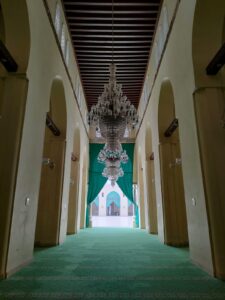
One of Cairo’s many epitaphs is the “City of 1,000 Minarets”. Those who are interested in architecture will be awestruck by the beauty and design of the city’s mosques. The greatest achievements of Cairo medieval artisans were the various decorative carving of stone surfaces, seen at its best on the city’s myriad minarets, domes, and facades.
Some examples are the Al-Hakim, Al-Aqmar, Al-Hussein, and Al-Mu’ayyad mosques.
Mosques and Madrasa( school), one of the iconic structures of Islamic Cairo, Islamic schools are where law and theology are taught, for example, the Qalawun, Al- Ghouri and Barquq madrasas.
Mausoleums have particularly intricate assemblages of inlaid stone and stucco, patterned with stars and floral motifs and lit by stained-glass windows. Sometimes the building separated, like Al- Ghouri, Barquq, and Qalawun complexes.
Khanqahs were a sort of monastery or lodge for the Sufis, who espoused in the mystic, esoteric approach to the Muslim religion and for which seclusion and asceticism played an important role. It is also where the sheikh (Muslim father) may reside and instruct his disciples. The ruler complex like Al-Ghouri and Barquq complexes.
The Religious and Funerary Complexes
These include a number of structures beside the Mosque that may, or may not be found attached together, are worth a visit. For example, many complexes include an Islamic school (madrasa); others may have mausoleums (tombs), or Sufi lodge (Khanqah) and even hospitals (maristan), along with other structures within the complex. These include the Qalawun, Al- Ghouri and Barquq complexes.