ANZAC Day and Sinai Liberation Day
25 APRIL – LEST WE FORGET
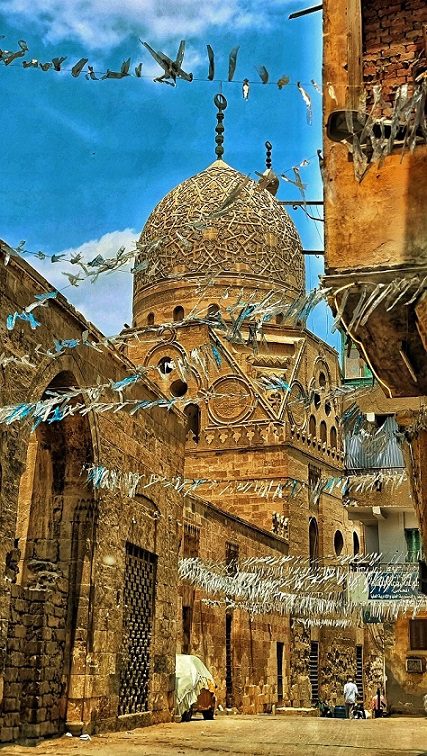
April 25th is significant in Egypt as Sinai Liberation Day and ANZAC Day.
First day postal cover commemoration of the liberation of Sinai.
2025 poster commemoration of 110 years since the Gallipoli campaign.
Sinai Liberation Day is a national holiday in Egypt, the anniversary of the 1982 liberation of the peninsula of Sinai from Israeli occupation, in accordance with the international peace treaty of 1979.
On this day, Egyptians remember the members of the Egyptian armed forces and their sacrifices which led to the recovery of Sinai from occupation.
This day is also dedicated to celebrating the beauty of Sinai, which after the occupation became a popular destination for Egyptians and foreign tourists. Every year thousands of visitors are drawn here by the magnificent Red Sea coral reefs, captivating mountains and desert, and Bedouin culture, in addition to historic places such as the Monastery of Saint Catherine, Gebel Musa (Mount Sinai), Citadel of Saladin, and the ancient sites of the Nawamis and Serabit el-Khadim.
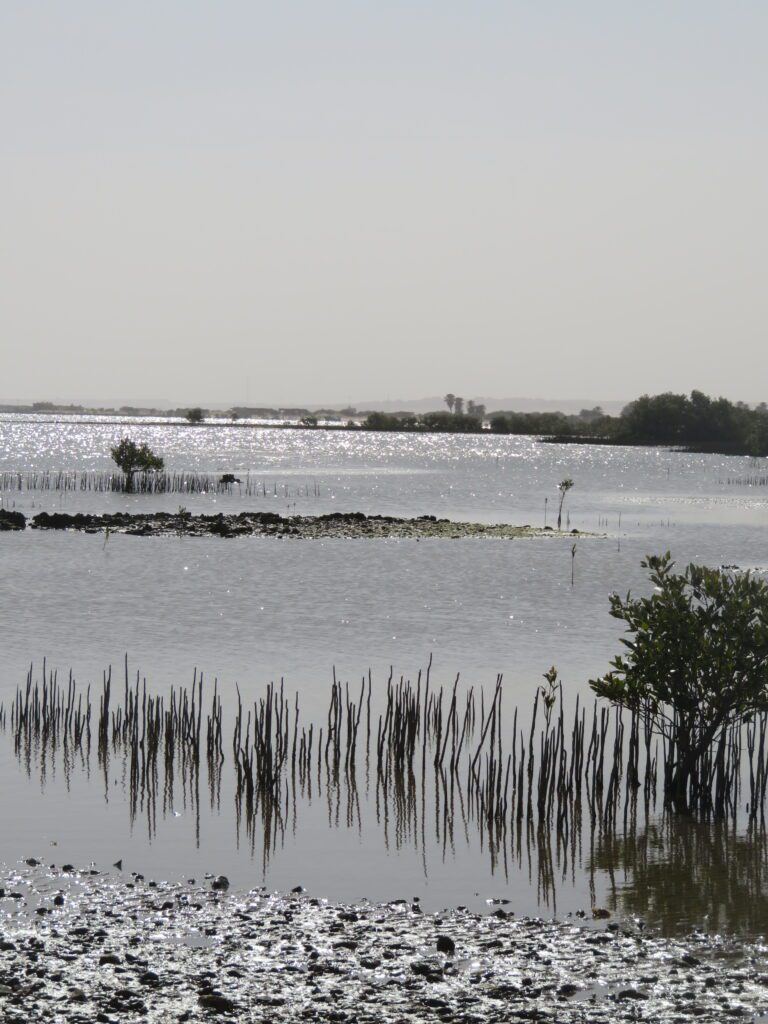
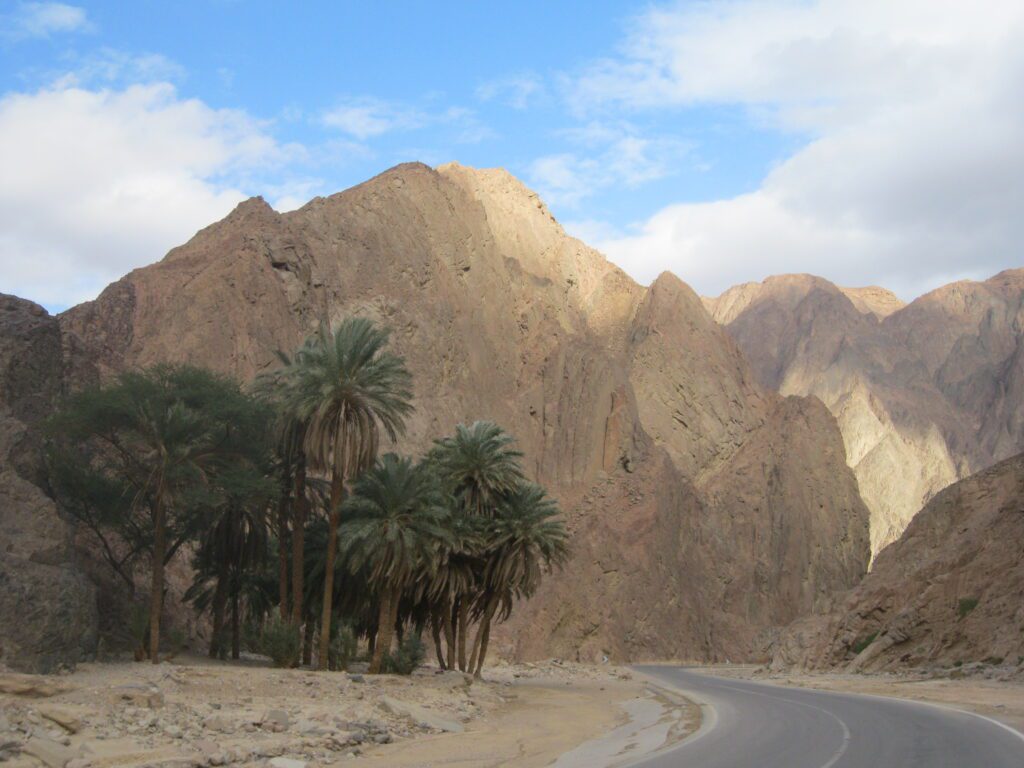
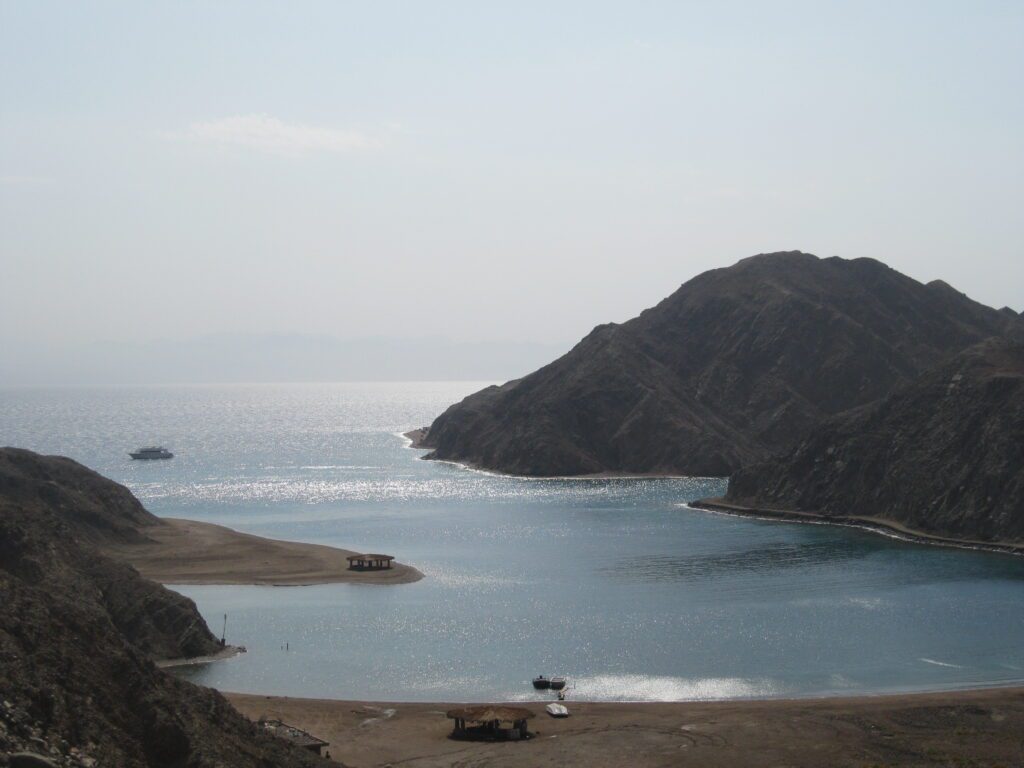
Beauty of the Sinai Peninsula.
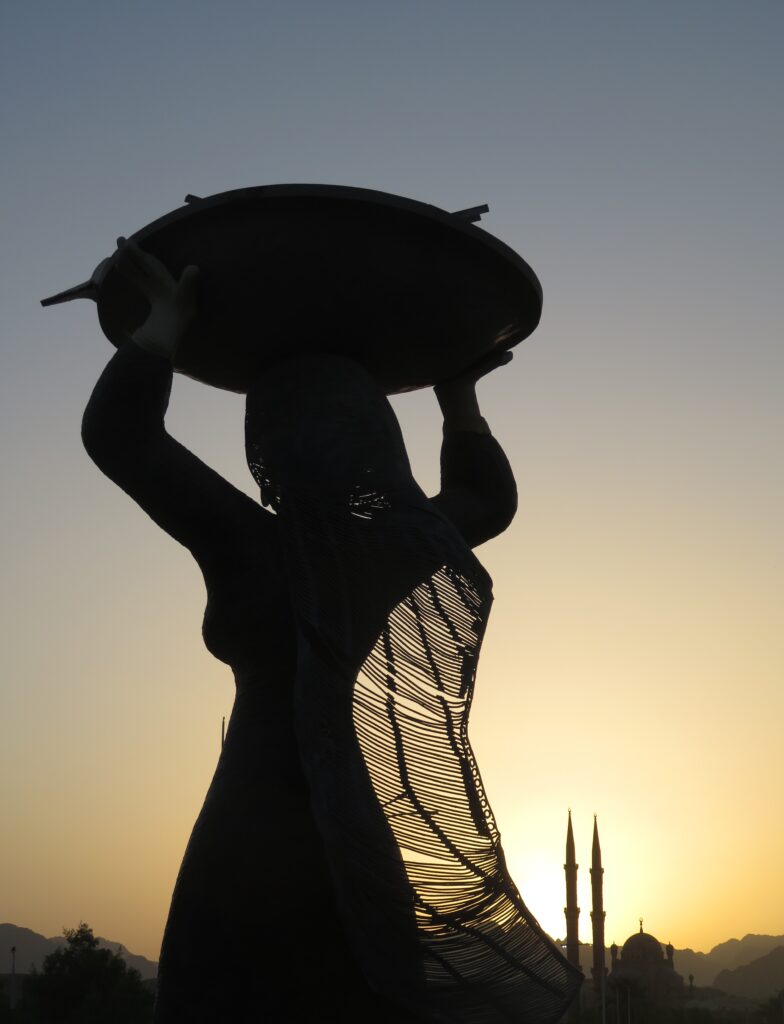
At the base of the road leading up to Ras Um el Sid, a headland in Sharm el Sheikh, and below the apartments of the former Israeli military settlement, is this statue of Umm El-Sayed. The story behind the statue is of a young Egyptian Bedouin girl who helped a group of fedayeen – guerilla fighters or commandos – who were sneaking in to reach the hill area to carry out resistance operations during the Israeli occupation. When this girl passed away she was honored by the armed forces, and the hill was named after her as Umm El-Sayed Hill.
25th April is also ANZAC Day.
This day originally honored the members of the Australian and New Zealand Army Corps (ANZAC) who served in the Gallipoli campaign. For the vast majority of Australians and New Zealanders who landed on that day, it was their first experience of combat; by that evening 2,000 of them had been killed or wounded.
ANZAC Day is now a national day of remembrance that commemorates all Australians and New Zealanders who served and died in all wars, conflicts, and peacekeeping operations and the contribution and suffering of all those who have served.
Egypt had a substantial role in the experiences of many men and women, including those from Australia and New Zealand, who came here during World War I and World War II, many of them on the way to the battlefields of Europe.
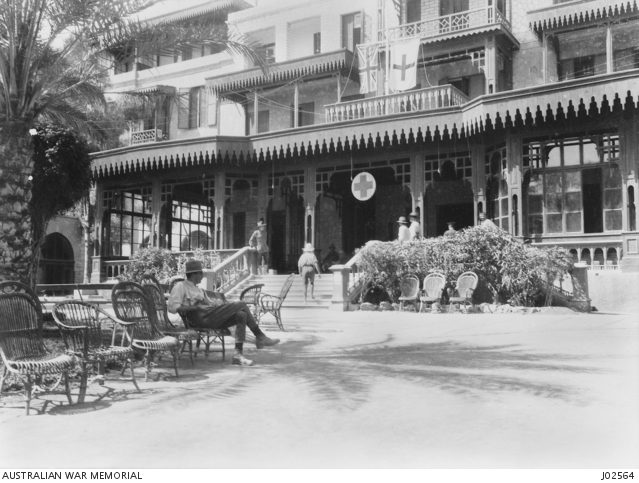
Above: The hospital at Mena House Hotel.
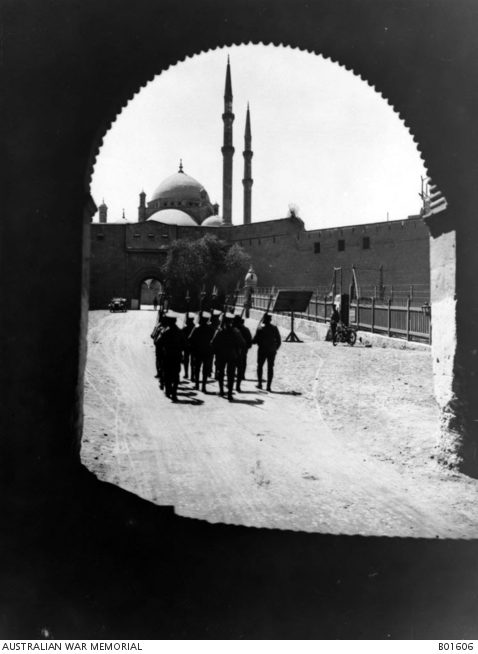
A group of soldiers marching through the Citadel, with the Mahommed Ali Mosque in the background.
Below: Alexandria, the camp of AIF mule transport personnel and animals.
Cairo, nursing staff of 2nd Australian General Hospital at the railway station waiting to leave for France.
Many members of the Australian and New Zealand forces disembarked from their ships at Alexandria and travelled by train to camps near Cairo for training. This short excerpt from the National Film Unit 1973 series, ‘The years back,’ shows the troops arriving in Alexandria and then training with their horses in the desert sands around Zeitoun camp, circa 1914-1915.
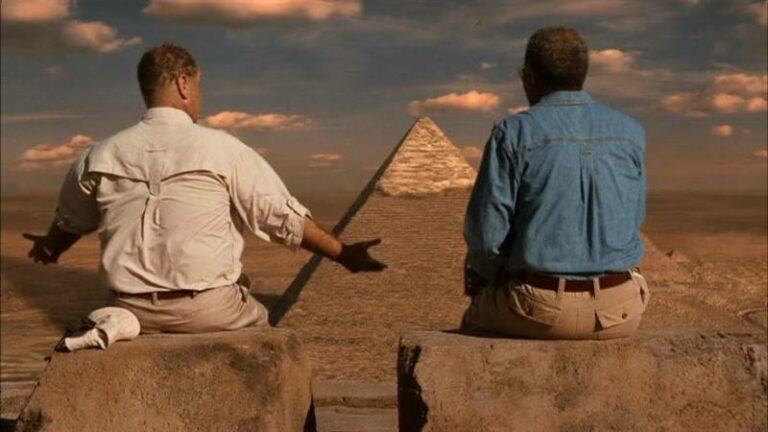
Set partly in Egypt, the film “Gallipoli” gave many viewers memorable views of Cairo and Giza. Released in 1981, directed by Peter Weir, the film featured Mel Gibson and Mark Lee as two Australian sprinters who face the realities of war when they are sent to fight in the Gallipoli campaign in Turkey during World War I. Many of the scenes were filmed in and around Cairo, including their reckless race up the pyramid.
Trailer https://youtu.be/kLLLYGAKCKM?si=WgWh5vYqrkIp9WN_
Australians and New Zealanders call the WWI campaign Gallipoli, while Turks refer to it as Çanakkale Savasi. For a Turkish perspective on the events of Gallipoli, watch the film “Çanakkale 1915” with English subtitles. https://www.youtube.com/watch?v=uDKb4qGfnbc
This film includes poignant moments about the futility of conflict, when the soldiers of both sides meet to collect their wounded during a ceasefire, and covers several battles over months, not only what we think of when we hear “Gallipoli” and 25th April.
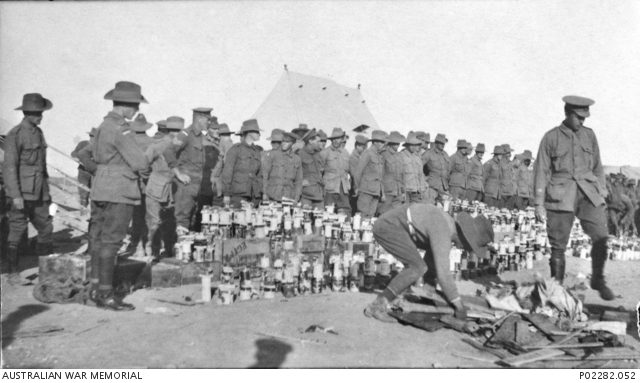
Above: At El Dabaa, Christmas billies, boxes and tinned foods, gifts of the Australian Comforts Fund.
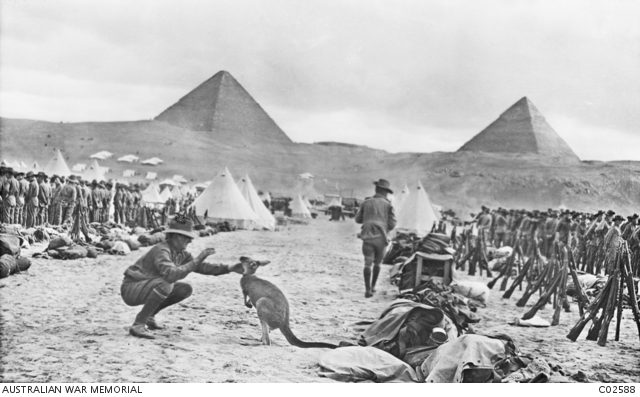
Giza, soldier in the foreground is playing with a kangaroo, the regimental mascot.
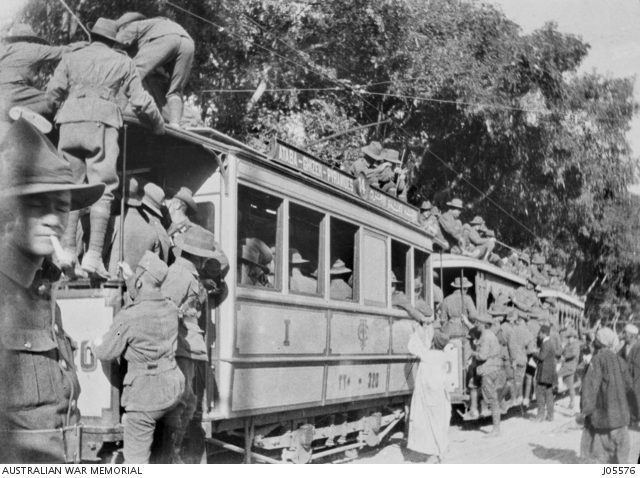
Below: Men of the 7th battalion, A.I.F. crowding on board the tram cars when going to Cairo on leave.
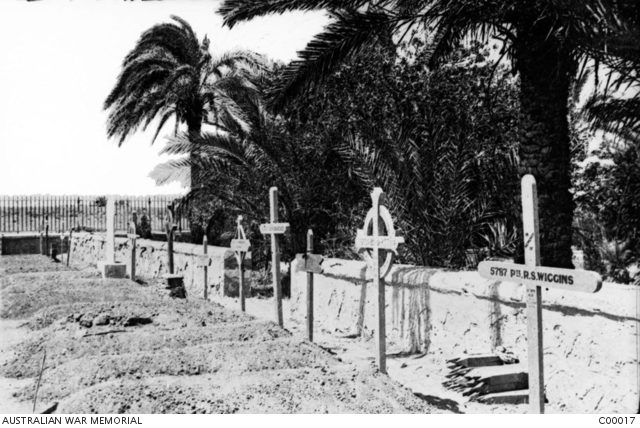
The Australian section of the Tel el Kebir War Memorial Cemetery in Egypt, near the camp of the same name between Cairo and the Suez Canal.
Archives often reveal more than popular films about the actual experiences of those who visited Cairo not as tourists.
There are thousands of photographs, and diaries, letters, film and audio that document the experiences of some of these men and women who came to Egypt, including in the extensive collections of the Australian War Memorial. Also included are many photos of the troops and nurses in the training camps, hospitals, and enjoying recreational activities in and around Cairo. One young soldier wrote on a postcard from Cairo in 1914 to his family in country Victoria, Australia: “…you can bet we are having a great time, the time of our life in fact”.
It is interesting in the collections to see a former casino, skating rink and other places in Cairo and Alexandria used as hospitals, in addition to Mena House Hotel which many Australians know of as a WWI hospital and which returned to its original role as a grand hotel.
There were even weddings documented, including one beneath the Giza pyramids which you can read about here
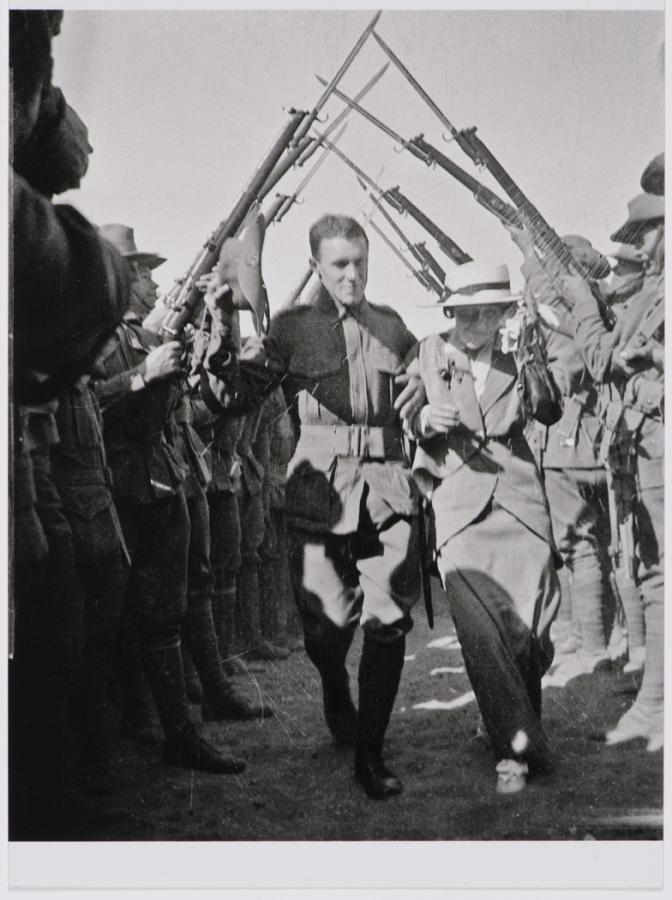
Wedding at Mena Camp, Giza
photo by Victor Cromwell, 1915.
Another example from archives is the album “Kensington to Cairo and from Cairo to Gallipoli” photographs by Henry Charles Marshall (1914–1915), in the State Library of N.S.W., Australia.
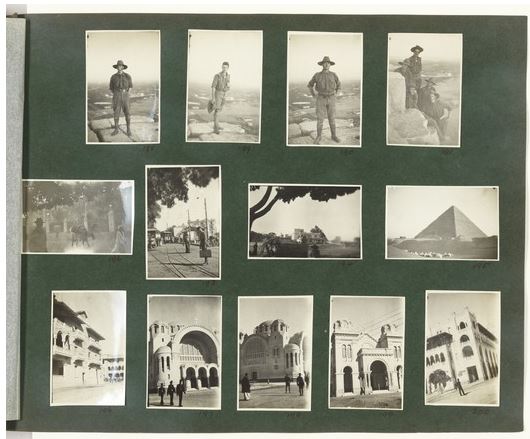
While at Mena Camp in Egypt, Marshall developed some of his films. There are 523 images in this album, and he wrote captions for 356 photographs. The last photograph of Marshall shows him sitting in his dugout at Gallipoli, shaving. He did not survive the war.
The State Library includes audio about the album and Marshall’s war experiences. You can also see some of his photos in the slideshow above.
ARE YOU INTERESTED IN VISITING THE MILITARY CEMETERIES OF EL ALAMEIN OR CAIRO, OR OTHER MILITARY CEMETERIES IN EGYPT?
CONTACT REAL EGYPT on email [email protected] or WhatsApp +20110 002 2242
ADDITIONAL VIEWING and READING:
Soldier speaking about Zeitoun camp, Egypt 1914-1915
Australian War Memorial collections
Article about Australian troops arriving in Cairo in 1914
Egypt War Graves Project excellent research updates.
MORE ABOUT GALLIPOLI
The Gallipoli campaign, the Dardanelles campaign, the Defence of Gallipoli or the Battle of Gallipoli (Turkish: Gelibolu Muharebesi, Çanakkale Muharebeleri or Çanakkale Savaşı) was a military campaign in the First World War on the Gallipoli peninsula (now Gelibolu) from 19 February 1915 to 9 January 1916.
Facebook page Gallipoli,1915 photos and information including first hand accounts from soldiers.
ANZAC Portal sharing Australia’s military and service history through the experiences of our veterans.
Timeline of Australians and the Gallipoli Campaign
SIGNIFICANT DATES for ANZACS in EGYPT
3 December 1914
Units of the AIF began disembarking in Egypt. They were sent to Mena Camp where training commenced. It had been decided to hold the Australians and New Zealanders in Egypt because proper camps in England were not ready to receive them.
21 December 1914
Major-General William Birdwood took command of the Australian and New Zealand units in Egypt. These units were formed into an army corps of three divisions — 1st Australian Division, the New Zealand and Australian Division and a mounted division. The corps was known as the Australian and New Zealand Army Corps. This was abbreviated later to ‘ANZAC’ and those who served in it became known as ‘Anzacs’.
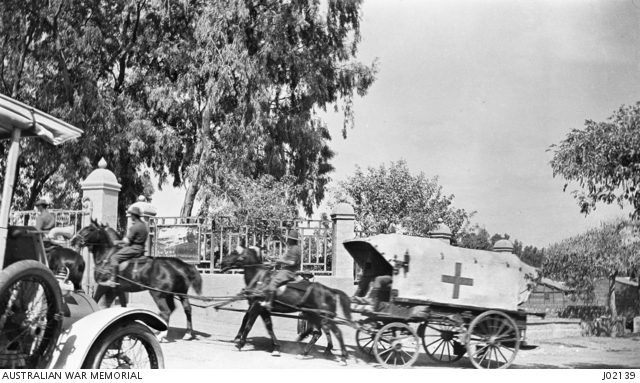
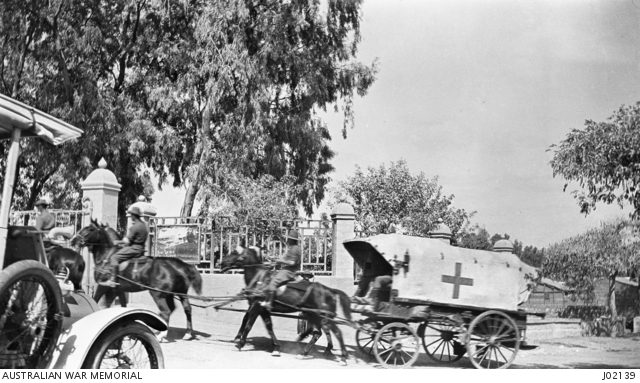
Above: An ambulance taking sick soldiers into Mena House Hotel, which was occupied by No 2 Australian General Hospital.
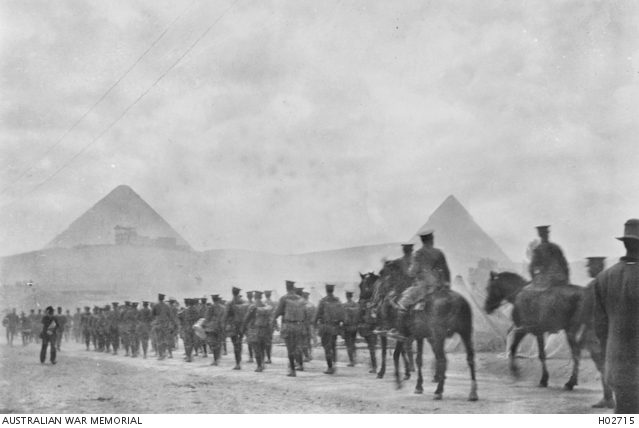
Mena Camp, A section of a march past before General Sir Ian Hamilton with Pyramids in the background.
Below: The last parade of the 3rd Australian Light Horse Brigade at Heliopolis race course 1915-05-14, the day the brigade entrained for Alexandria to embark for Gallipoli.
H.M.T. Ceramic – Suez Canal.
PHOTOS additional information:
Thanks to the Australian War Memorial for photos from the collections.
Wedding at Mena Camp, Giza: by Victor Cromwell, 1915. From photographic negatives of the 10th Battalion, AIF at Mena Camp, Egypt, 1914-1915.
Mitchell Library, State Library of N.S.W., Australia.Henry C. Marshall photographer.
View complete album Kensington to Cairo and from Cairo to Gallipoli : Album of Photographs, 1914-1915 H.C. Marshall, 1914.
Umm El-Sayed statue, photos of Sinai by MindseyePhotographyEgypt.